NEWS | SOFTWARE | SHEET
Bearing Capacity of Soil: Learn its Methods, Types, and Calculation

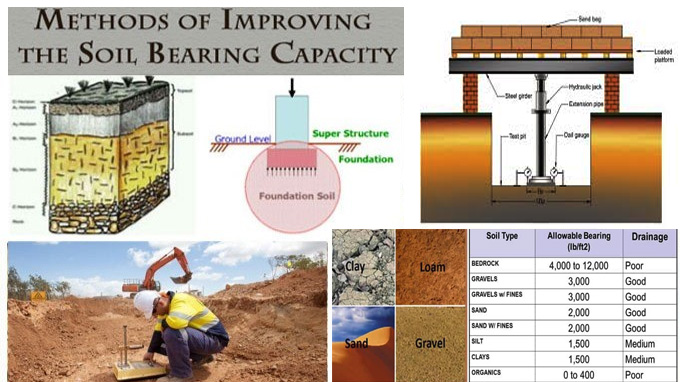
The bearing capacity of the foundations depends upon several factors. The dimensions of the foundation, the depth of the foundation, the soil of the foundation, the groundwater table, the shear strength, and the thickness of the fill layer influence the bearing capacity of the foundation structure.
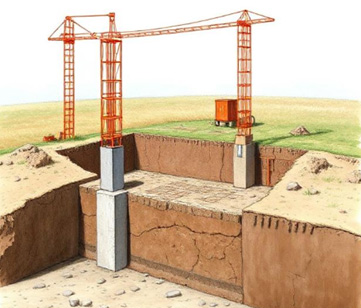
Method for verifying the bearing capacity of foundations
A direct method, named the zone load test method, has been used to determine the bearing capacity of the foundation structure. In this test, footing with more realistic dimensions has been loaded up to the design loads, and the settlement behaviour has been monitored to determine the load-bearing capacity of the foundations.
Concept about the bearing capacity of soil
The bearing capacity of soil indicates the ability of the soil to support the loads. The bearing capacity of the soil is one of the important factors in the construction work, as the load is placed on the ground during the construction works, and the soil should have the ability to withstand these loads without any kind of settlements or failures.
The ultimate bearing capacity of the soil refers to the maximum vertical pressure that has been applied to the surface area of the ground before developing the shear failure mechanism in the supporting soil. The depth and the stiffness of the foundation soil influence the occurrence of the shear failure. In this context, the ultimate bearing capacity of the soil helps to identify the maximum loads that the soil can resist before failure.
The allowable bearing capacity of the soil refers to that specific amount of load that the soil can resist without experiencing any kind of shear failure. The allowable bearing capacity of the soil only takes into account the settlement of the soil, which is lessers than the ultimate bearing capacity of the soil.
Factors that impact the soil bearing capacity
Cohesionless Soils
In the case of cohesionless soils, the bearing capacity depends upon several factors, which are:
- The depth and width of the footing influence the bearing capacity of the cohesionless soils.
- The position of the groundwater table and the unit weight of the soil also influence the bearing capacity of the cohesionless soils.
- The friction angle and the relative density also impact the load-bearing capacity of the cohesionless soils.
Cohesive Soil
- In the case of cohesive soils, the bearing capacity of the footing is influenced by the cohesion of the soils.
- In the case of increasing the foundation depth, the bearing capacity of the soil has also been increased.
Discuss the different types of soil bearing capacity
Ultimate bearing capacity of the soil
This type of soil bearing capacity indicates the maximum vertical pressure that has been applied to the surface area of the ground, and the shear failure mechanism has been developed.
Net ultimate bearing capacity
This refers to the net pressure, which can be increased at the foundation base, and leads to the shear failure of the soil.
Net safe settlement pressure
This type of soil bearing capacity indicates the maximum load of the soil can resist before exceeding the allowable amount of soil settlement.
Net allowable bearing capacity
While designing the foundation structure, this type of bearing capacity has been used.
Gross safe bearing capacity
This type of soil bearing capacity indicates the maximum gross intensity of loading which can be carried out safely by the soil against shear failure.
Methods for verifying the bearing capacity of soil
There are numerous methods that have been used to verify the bearing capacity of soil, which are as follows:
Standard Penetration Test
This testing method has been widely used for estimating the bearing capacity of fine and coarse-grained soil. The results of the standard penetration test are not as appropriate for clay or gravel as coarse-grained soil.
Cone Penetration Test
The cone penetration test provides knowledge about the resistance capacity of the soil against penetration. This test helps to provide detailed knowledge about the soil resistance capacity and its properties. In this soil bearing capacity testing method, a cone-shaped probe has been pushed into the ground at a constant rate, and the resistance capacity has been determined.
Pressure Meter Test
In the pressure meter test, a cylindrical probe has been inserted into the borehole and inflated to apply pressure to the surrounding soil. The soil deformation under certain pressures can also be estimated by performing the pressure meter test.
Plate Load Test
In the plate load test, an increasing load has been applied through a circular steel plate, which helps to estimate the strength and the bearing capacity of the soil. In this test, the soil and the behaviour of the soil under applied pressure on soil can also be assessed.
Vane Shear Test
In this test, the shear strength of the soil has been measured on the basis of the torque required to rotate the vane, and after that, the soil bearing capacity has been estimated.