NEWS | SOFTWARE | SHEET
Understanding Concrete Slab in Construction

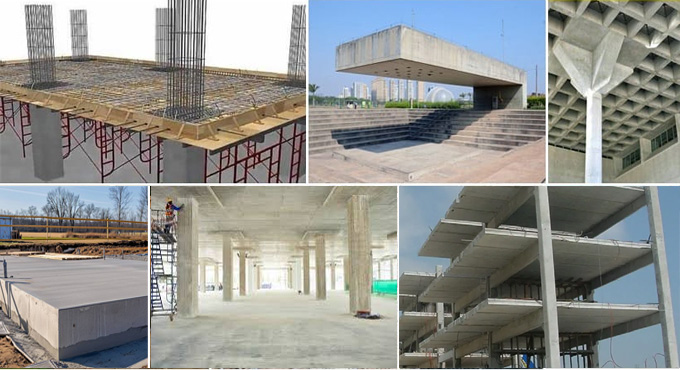
The concrete slabs act as the structural element, which helps to provide a flat surface within the building structure. The concrete slab can receive the loads from the building structure and transfer the loads into the ground through the beams, columns and footings. In both frame structures and load-bearing structures, the concrete slab has been used and provides supports for the entire structural weight. In some cases, the concrete slabs have been reinforced with steel bars, which help to increase their strength, as well as enhances their durability.
Effectiveness of using the concrete slab
The concrete slab has numerous advantages, which make it a better choice for contractors and builders.
Long-term durability
The concrete slabs have higher strength and long-term durability, which can resist significant loads. The reinforced concrete slabs can last for decades without maintenance or with less maintenance.
Cost-effective benefits
The construction process of the concrete slab involves less material and labour, which helps to save both labour cost and construction cost of the concrete slab.
Requiring low maintenance
Low maintenance is required for the concrete slabs as compared to the other types of foundation structure. In the concrete slabs, there is no gap or crawl space, which reduces the risks of pest infections or wood rot. The properly sealed concrete slab also helps to resist moisture and prevent cracking, thus ensuring the long-term durability of the concrete slab.
Easy to install
The installation process of the concrete is simple and can be done within a few days, which makes it appropriate for construction projects with tight timelines.
Resistance to pests
There are no crawl spaces within the concrete slabs, which helps to make a barrier to the pests, thus making a healthier and hygienic foundation structure.
Energy efficient
The concrete slabs act as thermal masses, which help to store heat during the day and also help to release the heat at night. Thus, the concrete slabs help to maintain the indoor temperature of the building structure, as well as reduce the energy bills.
What are the key considerations while constructing a concrete slab
Condition of the weather
Appropriate material should be selected for the concrete slab to resist the harsh weather conditions.
Thickness and reinforcement of the slab
The thickness and reinforcement of the concrete slab should be done by assessing the project’s requirements, as these factors directly influence the strength and durability of the concrete slab.
Load-bearing capacity
The load-bearing capacity of the concrete slab indicates the maximum load that has been resisted by the concrete slab without being damaged. As a result, the load-bearing capacity of the concrete slab should be determined accurately to ensure safety.
Compliance with standards
It also needs to ensure that the construction process of the concrete slab complies with the rules and regulations of the government authorities, which helps to maintain integrity and compliance.
Discuss the construction methods of the concrete slabs
The concrete slab has been constructed by following several steps, which are as follows:
Preparation of the construction site
The construction site should be prepared properly before starting the slab construction process. In this context, the construction site has been cleared of vegetation, debris and other types of obstructions and make a flat surface for the slab.
Preparing formwork
After preparing the construction site, formwork has been prepared with wood or metal. This formwork helps to shape the concrete slab by holding the concrete while it cures. In this context, the formwork for the concrete slab should be securely anchored, which helps to prevent shifting during the concrete pouring process.
Reinforcement placement
After building the formwork, the reinforcement also needs to be installed, and it has been done before pouring the concrete. In this context, wire mesh or steel rebar has been reinforced at the appropriate depth, which helps to prevent cracking in the concrete slab, as well as improves the tensile strength of the concrete slab.
Concrete pouring process
Water, cement and aggregates have been mixed at a proper ratio and poured into the formwork to form the concrete slab. In this context, a vibrator has been used to eliminate the air pockets within the concrete and also ensure the uniform settlement of the concrete within the formwork.
Completing the surface
After pouring the concrete mix into the formwork, a trowel or screed is used to level the surface area of the slab.
Curing process
The concrete slab should be allowed to cure properly to achieve the optimal strength. In this context, the concrete slab needs to stay moist, which helps to prevent the premature drying and cracking of the concrete slab.
Discuss the different types of concrete slabs
Conventional Slab
This type of concrete slab has been supported by columns and beams, which can be of two types: one-way concrete slab and two-way concrete slab.
Hollow-Core Slab
This hollow-core concrete slab has a hollow from inside, which is lightweight and easily adaptable for building structures.
Bubble-Deck Slab
The centre of this type of concrete slab has been filled with polyethene plastic balls, which helps to reduce the overall weight of the slab and enables a wide range of applications within construction projects.
Flat Slab
This type of concrete slab helps to connect the columns directly, which helps to provide flexibility for creating free spaces within the building structure.
Waffle Slab
This type of concrete slab has a waffle-like pattern, which helps to maintain appropriate balance between the strength and weight of the structure.