NEWS | SOFTWARE | SHEET
What is the difference between pre-tension and post-tension in concrete?

The pre-stressing of the concrete is the method of introducing internal stresses in the construction materials before subjecting them to external forces. The pre-stressing method has been achieved by stretching the steel wires and anchoring the wires against the concrete. The effective pre-stressing method is necessary to elongate the steel and to securely anchor the steel in the concrete.
Discuss the different types of pre-stressing methods of concrete
The pre-stressing method of the concrete has been classified into two types, which are the pre-tensioning system and the post-tensioning system.
Learn about the pre-tensioning system
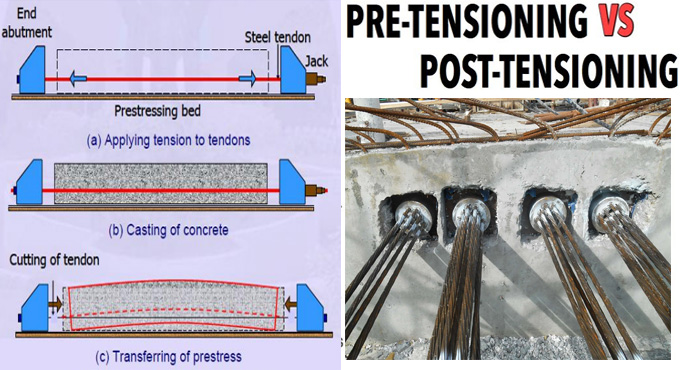
In the pre-tensioning method, the concrete has been cast around the steel tendons. The tendons are tensioned against the abutments before the placement of the concrete. After hardening the concrete, the tension force is released and cut off after achieving the required strength of the concrete. The pre-tensioning system helps to enhance the strength and durability of the concrete. This pre-tensioning system has been done along with precast.
Effectiveness of the pre-tensioned concrete in the construction project
- The pre-tensioned concrete helps to reduce the material usage and also helps to enhance the strength and durability of the concrete.
- The pre-tensioned concrete helps to precise tensioning system in a controlled environment.
- The pre-tensioned concrete also helps to accelerate the construction process, along with the precast elements.
- The pre-tensioned concrete required lower maintenance because of its reduced corrosion susceptibility.
Learn about the post-tensioning system
In the post-tensioning process, tension has been applied to the tendons after hardening the concrete. This method helps to allow for the thinner slabs and longer span length among the supports and has been used in large-scale projects, for example, bridge construction, skyscrapers and sports facilities. The post-tensioning system has been done either as precast or as cast-in-place.
The most popular post-tensioning system includes:
- Freyssinet System: This system helps to utilise high-strength steel wires that have been grouped into a cable.
- Gifford Udall System: This system employed a single-wire system, which has been stressed independently by using double-acting jacks.
- Magnel Blaton System: This system helps to form cables along with multiple wires, which have been used for various applications.
- Lee McCall System: This system has been utilised for pre-stressing the steel bars.
Effectiveness of the post-tensioned concrete in the construction project:
- The post-tensioned concrete helps to enable the longer spans in the concrete support and thus reduces the requirements for additional supports.
- The post-tensioned concrete also helps to offer flexibility in the design and material usage.
- The post-tensioned concrete also helps to improve the crack control and increase the structural durability of the concrete structure.
- The pre-tensioned concrete also helps to achieve better load distribution ability to the concrete structure.
Discuss the difference between the pre-tensioning and post-tensioning systems
Based on the application method
In the pre-tensioned concrete, the tensioning process is done before the concrete is cast. On the other hand, the tensioning has been done after hardening the concrete in the post-tensioning system.
Based on the tensioning time
The tensioning process has occurred at the pre-casting facility in the pre-tensioned concrete, whereas the tensioning system has occurred at the construction site in the post-tensioned concrete.
Based on the anchorage method
The pre-tensioned concrete used the end anchorages, whereas the post-tensioned concrete required both immediate and end anchorages.
Based on the tendons location
In the pre-tensioned concrete, the tendons have been placed and tensioned in the formwork before pouring the concrete. On the other hand, the tendons are positioned after pouring the concrete in the post-tensioning system.
Based on the shape's flexibility
Due to the placement of the tendons, there is limited flexibility in the shapes of the pre-tensioned concrete, whereas the post-tensioned concrete offers more flexibility in the shape and design.
Based on the transportation challenges
Because of the large precast members in the pre-tensioned concrete, transportation challenges may be faced. On the other hand, the post-tensioned concrete allows a more manageable transportation process of the construction components.
Based on the site setup
The pre-tensioned concrete required specialised formwork for placement of the tendons, whereas the post-tensioned concrete requires simplified formwork setup as the tendons have been placed later.
Based on the grouting of tendons
In the pre-tensioned concrete, the tendons are enclosed in the concrete; as a result, grouting is not required. On the other hand, grouting is necessary in the case of the post-tensioned concrete to protect the tendons from corrosion.
Based on the losses during the pre-stressing process
The pre-tensioned concrete experiences lower losses in the pre-stressing method, whereas the post-tensioned concrete faces higher losses due to the tendon friction.
Based on the applications
The pre-tensioned concrete is commonly used in bridges, precast concrete elements and griders. On the other hand, the post-tensioned concrete has been commonly used in the beams, slabs and in those structures where longer spans are required.