NEWS | SOFTWARE | SHEET
Architectural Estimating Sheet: A Guide for Project Managers
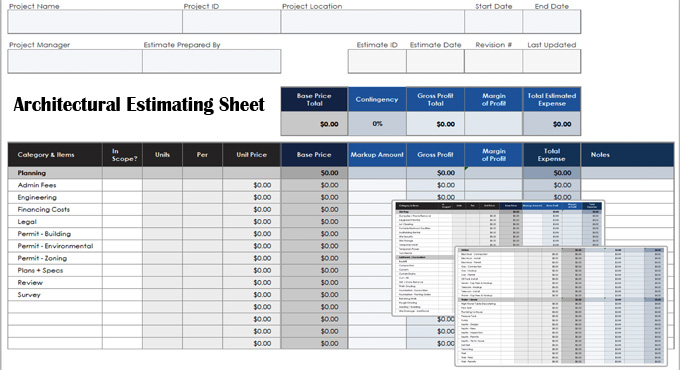
The architectural estimating sheet refers to the detailed document or the Excel spreadsheet, which has been used to calculate the total amount of construction materials, the number of labourers and the overhead costs of the construction project on the basis of the architectural drawings.
The architectural estimating sheet includes the review and estimation of the overall construction costs. The architectural estimating sheet helps to provide a detailed description of the quantities and material types required for the architectural construction process. The architectural estimating sheet has been commonly created in Microsoft Excel, featuring automated formulas for cost analysis and quantity calculation.
Discuss the key elements of the architectural estimating sheet
- The architectural estimating sheet includes the quantity takeoffs, which include the initial measurements, for example, length, width or height of the construction items like walls, foundations and slabs.
- The architectural estimating sheet also includes material costing, in which the unit costs for raw inputs, including supply, freight, and wastage, should be included.
- The labour costs, including the wages for the labourers on the basis of their productivity level and time, should also be included in the architectural estimating sheet.
- The overhead costs and contingencies should also be included in the architectural estimating sheet for preparation of the construction site, construction equipment and unforeseen expenses.
- In the architectural estimating sheet, the construction items have been organised on the basis of the substructure, superstructure and finishes.
Learn about the process of conducting architectural estimation
The architectural estimation process has started by reviewing the design document. At first, all blueprints and project specifications need to be gathered, which helps to understand the scope of the construction project. After that, the contractors need to perform the detailed takeoffs and categorise the construction items, such as structural components and finishes. In the next step, the contractor needs to apply the cost data from reliable sources, which helps to incorporate labour rates and overhead costs of the project. After performing the detailed takeoff, the costs for roofing materials have been calculated per square metre, which factors in regional labour variations. In the next step, the estimate needs to be reviewed and refined along with the project team's input, which helps to ensure the successful completion of the construction project.
Understanding the key factors that influence the accuracy of the architectural estimation process
- Different factors can influence the accuracy of the architectural estimation process, for example, the completeness of the design, the market volatility and the construction site specifics.
- The price of construction materials can fluctuate; for example, the cost of steel can be increased due to an issue in the supply chain.
- The incomplete designs can also lead to impacting the accuracy of the architectural estimation process.
- The construction site conditions, for example, the type of soil or the accessibility of the construction site, also impact the accuracy of the architectural estimating sheet. In the case of the coastal project, the erosion risks need to be accounted for and added to the overall estimates, which helps to prevent a later cost rise in the project.
What are the roles of the architects and estimators in the architectural estimation process?
The architects and estimators can collaborate easily and closely in the architectural estimation process, which helps to provide design intent, and the estimators can translate this design intent into costs. The architects help to ensure that estimates can reflect the creative visions of the construction project, whereas the project estimators help to bring the financial realism of the construction project.
The partnership between the architects and estimators shines in the mixed-use developments, in which the architects can input on the sustainable features and guide an estimator to source eco-friendly materials at competitive prices.
The collaborative work of the architects and project estimators helps to foster innovation in the construction project without compromising the project's feasibility, which helps to make the design and construction process more holistic and effective.
Learn about the best practices for getting the most reliable architectural estimation process
To get the most reliable architectural estimation, the standardised template of the architectural estimating sheet should be used. Standard templates of the architectural estimating sheet help to ensure design consistency across the projects, which helps to reduce the risks of project errors.
The contractors also need to conduct peer reviews for getting reliable architectural estimation.
Download Architectural Estimating Sheet
To get the most reliable architectural estimation process, the contractor needs to incorporate the real-time integration process, such as linking to the supplier databases, which helps to keep the cost current. In this context, the essential practices are: early verification of the design documents, building in a 5-10% contingency for uncertainties and collaborating with the multidisciplinary project teams.