NEWS | SOFTWARE | SHEET
Key Components of Sheet Metal Cost Estimation
The sheet metal refers to the thin and flat pieces of metal, which have been used in different industrial applications. The sheet metal can be cut into different shapes to be used in the metalworking process.
There are different types of materials that have been applied in the sheet metal, for example, copper, aluminium, brass, steel, tin, titanium and nickel. The sheet metal offers good corrosion resistance, as well as maintains formability and weldability.
Discuss the manufacturing cost estimation process for sheet metal
Different types of cost estimating methods have been used for sheet metal, which are:
- Job-order costing method: This method refers to the estimation of the manufacturing costs, in which the manufacturing process is done in batches.
- Process job order costing method: This cost estimation method is similar to the job-order method, which helps to follow process stages in production.
- Activity-based costing method: This method is based on the direct labour hours or rate-based system, which helps to evaluate the hourly costs.
In these manufacturing cost estimation methods of the sheet metals, the estimation process has been done in different segments, which are as follows:
Estimating the cost of the raw materials
The sheet metal manufacturing process requires one or more types of raw materials. In this context, the amount of raw materials required for a single sheet metal product should be estimated. In this context, (Raw material cost) = (Volume) * (Material density) * (Material cost per kg) can be followed to measure the cost of a single product of raw material. This formula can be followed to estimate each of the raw materials used in the sheet metal manufacturing process.
Estimating the cost of the machine
The hourly cost of the machine can also be calculated while estimating the manufacturing costs. In this context, (Machining cost) = (Hourly cost) * (Cycle time per one piece) / (Efficiency) can be followed to estimate the machine cost.
Discuss the ways of cutting the manufacturing costs of the sheet metal
Considering the plating and welding costs for sheet metal fabrication
While the welding process is required, uncoated cold rolled sheel are required to get the sheet metal parts coated to improve anti-corrosion properties. This process helps to enhance the lead times and costs. In this context, the manufacturers should take a close look at the designs to see if there are ways to avoid the welding process.
Bending the curve
To save money and time in the sheet metal manufacturing process, the manufacturer can incorporate geometries in the sheet metal parts that help to consider the manufacturer’s standard tooling. In this context, the internal bend radius should always be between 0.762mm and the material thickness.
Avoiding elaborate design materials
This is the easiest way to cut costs on the sheet metal parts. The specialised design elements look good, but taking them out of the sheet metal design models leads to simplicity in the design.
Flexible with the design of the sheet metals
While including the punch-form features in the designs of the sheet metals, for example, bridge lances, embossments, and ribs, the standardised size of the sheet metal has been maintained, which helps to avoid manufacturing delays and unnecessary costs in the manufacturing process.
Considering the delayed silkscreening process
The manufacturer should consider the delayed finishes, such as silkscreening and engraving, until later in the manufacturing process. While exploring different finishes, it needs to be considered that the silkscreening is expensive, but a whole lot more affordable than machine engraving. The manufacturer can apply a clear powder coat to the seal and cover the information, which will add cost and time to the parts, but can save money in the long term.
Learn about the good sheet metal manufacturing material and labour cost algorithm
The determination of the right labour and material cost algorithm for sheet metal is quite tricky. This estimation process depends on the different factors, for example, the complexity of the design project, the materials that are used on the project and also the skill level of labourers.
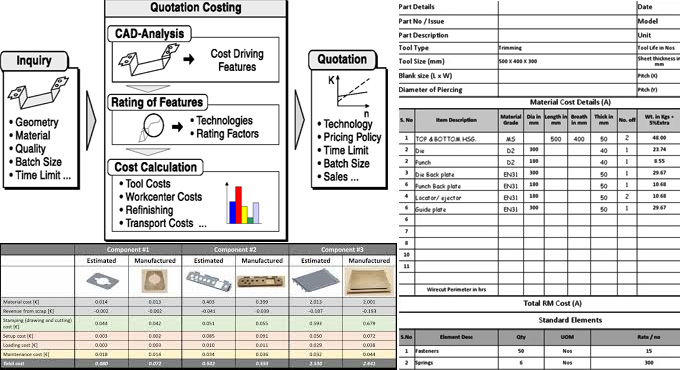
In this context, advanced software applications can be used, for example, the Paperless Parts software application helps to estimate the raw material costing by unfolding the sheet metal components, vectorising PDFs, and generating nests.
With the help of the intuitive tools of the Paperless Parts software application, the manufacturer can easily input the details of the project, and it also helps to generate more precise man-hour estimates. Thus, this software application can save valuable time in the manufacturing process. With the help of the Paperless Parts software application, the manufacturer can also reconfigure the bill of materials to match the specific manufacturing process of the shops.