NEWS | SOFTWARE | SHEET
Detailed Understanding of the Parts and Types of the Bridge Structure
The bridge structure spans horizontally between the supports and helps to carry vertical loads. The bridge structure has been built in areas where there is a requirement to cross over a natural obstacle, urban infrastructure, railway lines or water channels. Most of the bridge structure has almost the same components to complete the overall structure.
Learn about the different parts of the bridge structure
The bridge structure contains different parts, which are as follows:
Deck
Deck is one of the main parts of the bridge structure, which helps to pass goods, vehicles and people from one place to another.
Pile
Pile foundation is required in the case where the upper soil layer of the bridge is loose. The depth of the pile depends on the layer of the soil under the bridge structure. The pile foundation has been extended to a depth into the hard soil layer, which helps to make the building structure stable.
Pier
This part acts as the compression member of the bridge structure, which stays above the pile foundation and helps to make the bridge structure stable on the ground. The pier helps to provide spans at the intermediate points. In addition, the pier also helps to transfer the superstructure vertical loads to the foundation of the bridge.
Abutment
The support provided at the two ends of the bridge structure is the abutment.
Girder
A girder is also used in the bridge structure, which can be of two types: I-joist and Box. The box girder has been used in the prestressed condition within the bridge structure.
Rail track
In the case of passing a train through the bridge, a rail track should be installed at the bridge structure.
Understanding the advantages of the bridge structure
Improve connectivity
The bridge structure helps to facilitate the connection between the separated points, which helps to overcome natural or man-made obstacles, for example, rivers, highways, valleys or railways.
Providing economic benefits
The bridge structure also helps to improve the transportation infrastructure of the country. Thus, the bridge structure helps to boost the economic development of the country by reducing travel times, costs of transportation, and improving the accessibility of the market, jobs and resources.
Providing environmental benefits
The bridge structure also helps to minimise the environmental impacts by reducing the requirement of detours, facilitating efficient transportation and preserving natural habitats. Thus, the bridge structure helps to reduce pollution and carbon emissions on the environment.
Improve safety and accessibility
A well-designed bridge structure helps to improve safety by securing the crossings and providing accessible pathways for cyclists, pedestrians, and vehicles.
Increase aesthetic value
The bridge structure also helps to contribute to the identity and visual appearance of the cities, landscapes and regions.
Learn about the different types of bridges
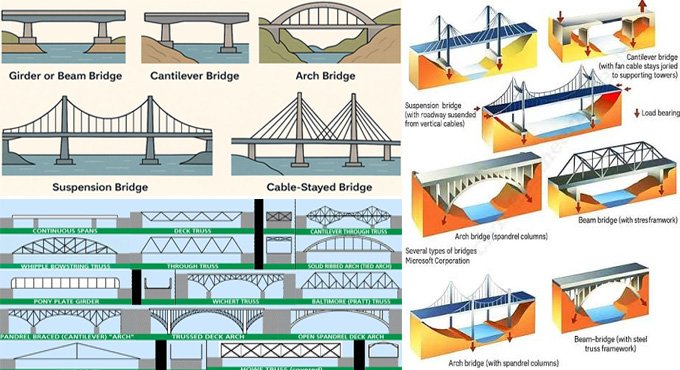
Arch Bridges
This type of bridge uses compression, which helps to support the bridge structure at each end of the bridge structure. The arch bridge helps to achieve a high level of strength and resistance for the overall bridge structure.
Cantilever Bridges
This type of bridge has been built by using pillars that have been securely anchored to the soil. This type of bridge structure has been constructed outwards from each pillar along with the horizontal beam that has been supported by using the diagonal bracing.
Cable-Stayed Bridges
In this type of bridge structure, deck cables have been connected to one or more vertical columns, pylons or towers. In the cable-stayed bridge structure, steel or concrete pylons, steel rope and post-tensioned concrete box girders have been used.
Beam Bridges
This type of bridge structure is one of the simpler types of bridges, which helps to achieve a longer continuous span. The beam bridge helps to support the deck above the bridge structure. This type of bridge structure is simple, easy and quick to construct.
Suspension Bridges
In this type of bridge structure, rope and wooden planks have been used. This type of bridge structure uses vertical towers that have been constructed from steel or reinforced concrete. The suspension bridge helps to create the longest spans along with minimum piers. This type of bridge can be constructed with a high deck, which allows plenty of clearance for passing ships.
Truss Bridges
This type of bridge has been constructed vertically and horizontally, which helps to absorb the tension and compression; thus, it can resist strong winds. Truss bridges can be constructed off-site and can be installed on the construction site.
Tied-Arch Bridges
This type of bridge structure is positioned above the deck and uses vertical cables attached to support the deck. This type of bridge structure is strong enough and can be built off-site.